In this article
What a brand includes
When people say “branding,” they often mean a logo. The logo is only the part people see first. A complete small business brand usually includes:
- A logo, plus a small mark for tiny spaces like an Instagram profile or a browser tab.
- Colors with exact codes for screen and print, so your sign and your website match.
- Fonts: one for headlines and one for text.
- A voice: how your business sounds in a caption, an email or a sign.
- A brand book: a short guide that shows anyone how to use all of the above.
Then it has to show up the same way everywhere your customers meet you: your website, packaging, labels, signs, business cards and social posts.
Start with the owner, not a template
A template gives you a logo that could belong to anyone. A brand that feels like yours starts with a conversation about you: your story, your vision for the business, your customers and your products.
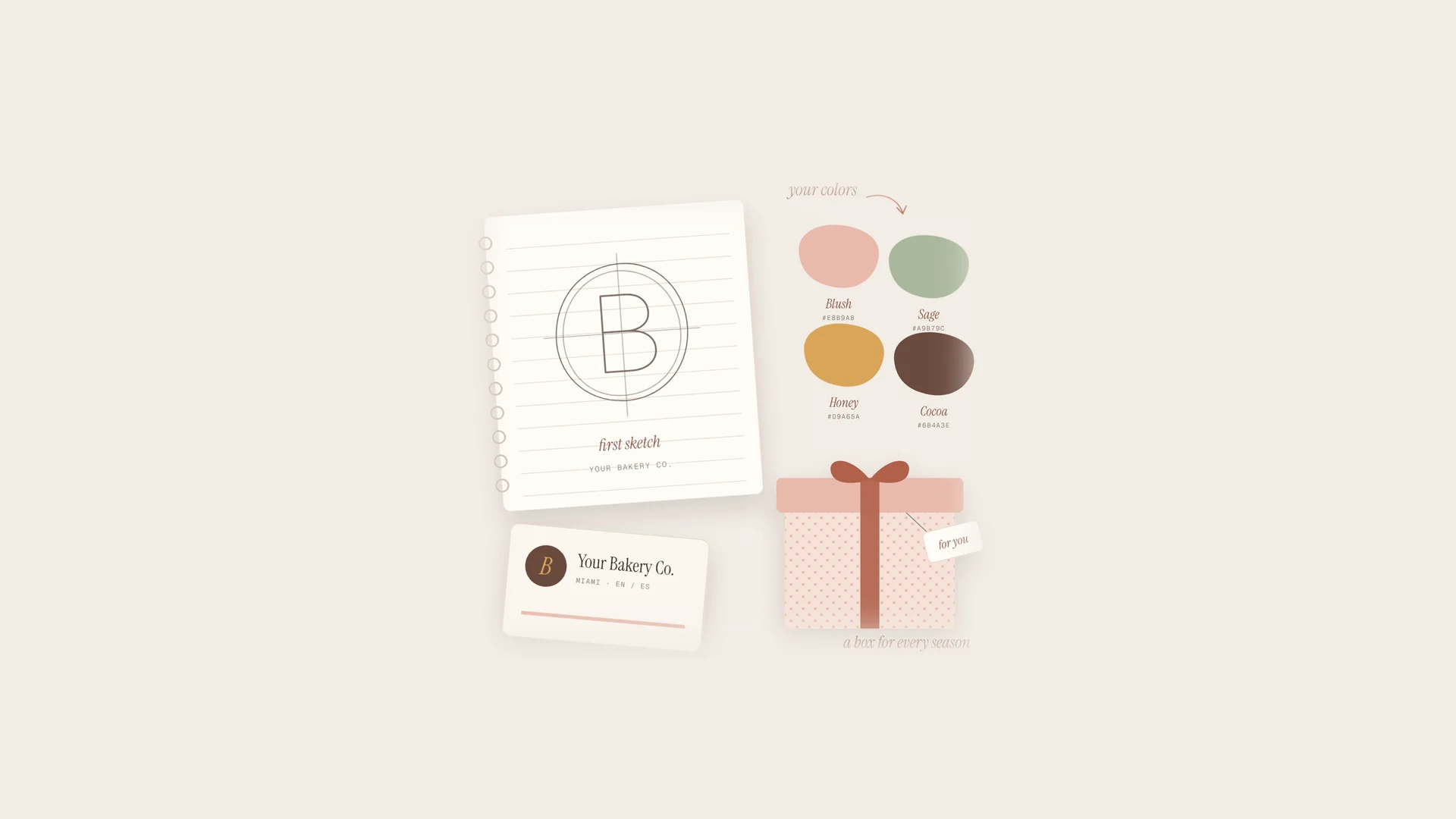
Colors are a good example. On our branding page we show a sample moodboard for a fictional Miami bakery owner, where every color traces back to her life: the blue of her grandmother’s recipe tin, the pink of the guava pastelitos that sell out first, the brown of her dad’s old Cuban coffee pot. Colors chosen that way don’t go out of style with the next trend, because they were never borrowed from one.
Tap a color to see where it came from
Every color in her palette has a story. Tap one.
A sample moodboard. The bakery and its owner are fictional.
The question to start with isn’t “what looks good?” It’s “what is true about this business?” The design comes from the answer.
Your industry is the starting point
Every industry has colors and letters customers already associate with it. A law firm usually needs to feel calm and trustworthy. A bakery can be warm and playful. A jewelry store can feel quiet and elegant. Starting from what works in your industry keeps a brand easy to read at a glance. Your own story is what moves it from “a bakery” to “your bakery.”
A good designer shows you two or three directions, each with its own palette, its own fonts and a reason for both, on real pieces like a website, a box or a business card. You can try the idea yourself in the “colors and fonts by industry” tool on our branding page.
Design for the phone first
Most people will meet your brand on a phone screen before they ever see your sign. A logo that looks great on a poster can turn into a blur in a 40-pixel profile picture. Ask for:
- A main logo and a small mark that still reads when it’s tiny.
- Versions for light and dark backgrounds.
- A test on a real page. Before you approve a brand, you should see it on a real web page, not just on a white sheet.
Make it work in English and Spanish
In Miami, many customers will read your brand in two languages. A tagline that’s clever in English can sound stiff when translated word for word. The fix is simple: write your taglines and key phrases in both languages from the start, so the brand sounds natural to every customer instead of translated.
Plan the seasons
Your logo and colors should stay the same all year. What can change is the wrap: Valentine’s Day, Mother’s Day, summer and the holidays. Planning a seasonal look for your packaging, gift tags, website banner and posts ahead of time keeps the brand fresh without starting over, and saves the last-minute scramble before every holiday.
Valentine’s Day: same logo, a softer pink wrap.
Rebrand or start fresh?
- A new business needs a name to stand behind, a logo that works at any size and a look that feels like its owner.
- An established business usually needs a refresh, not a new identity. Keep what customers already recognize, and fix what holds you back, like a logo that blurs on a phone or colors that change from one flyer to the next.
What you should walk away with
A note on AI: it can help with busywork like mockups and file versions. The ideas, the taste and the final choices should be human, and made with you.
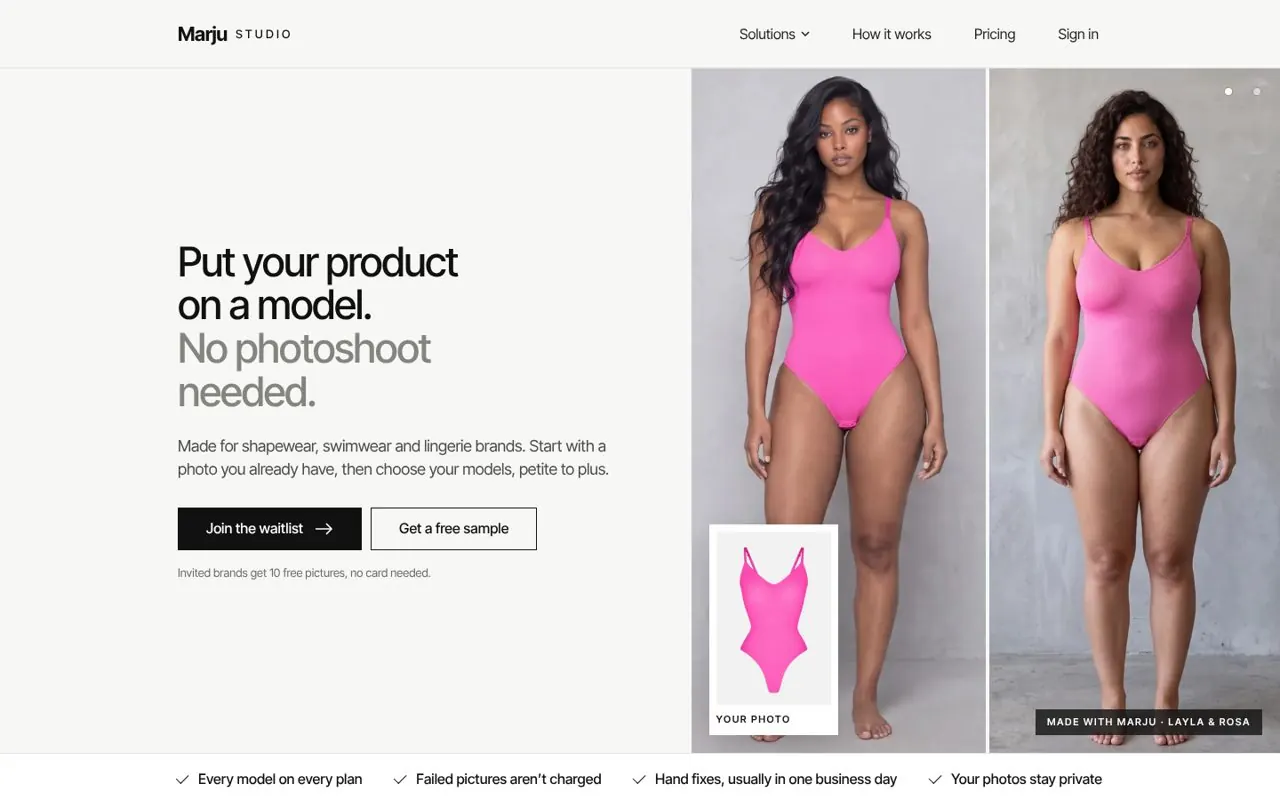
Two brands we’ve built from zero are CYRA Shape, a store we built, and Marju Studio, an app we built: the concept, logo and colors first, then the website around them. See how we design brands, or tell us about your business through our short form. No sales call.
 Giselle · Founder & creative lead, Bare Digital Studio